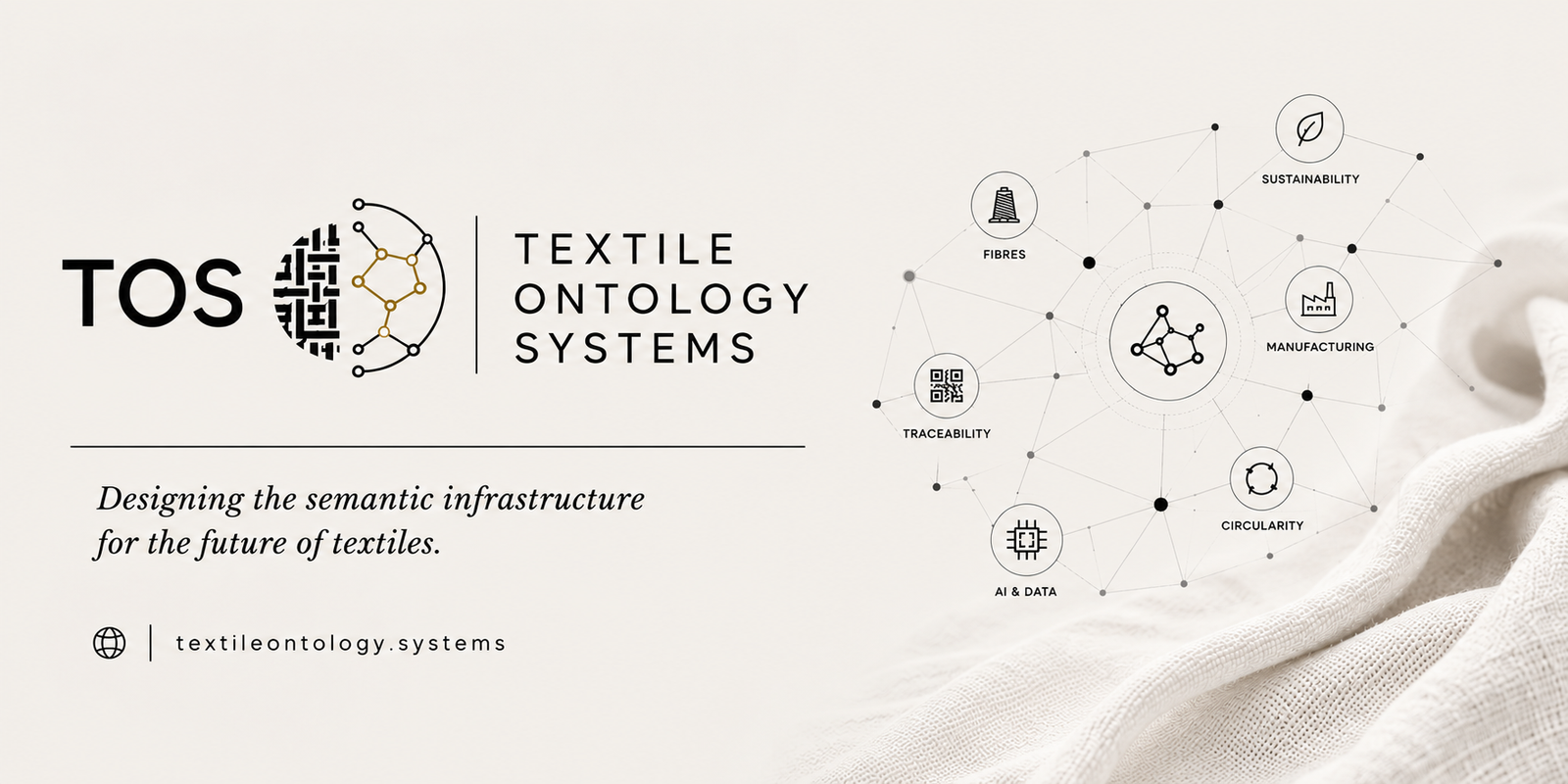
From fibre origin to finished product, TOS connects provenance, traceability, manufacturing intelligence and interoperable digital infrastructure into one unified circular platform.
Textile Ontology Systems (TOS) is an interoperable digital infrastructure platform that enables trusted information exchange across the global textile value chain, from fibre origin to intelligent manufacturing, product use and circular recovery.
TOS provides the semantic infrastructure that connects people, processes, systems and data across the entire textile value chain.
Capture verified fibre origin and chain of custody.
Track materials across every stage of production.
Create interoperable product information ready for emerging global regulations.
Transform textile knowledge into structured, machine-readable data.
Connect production data, processes and quality information through a common framework.
Enable simulation-based workforce training and knowledge transfer for future manufacturing.

Dominic D'Silva
The Textile Ontologist
Founder: Textile Ontology Systems
"Textiles are no longer just materials — they are data systems, environmental systems, manufacturing systems, and cultural systems. My work focuses on building the semantic infrastructure that allows these systems to communicate intelligently."
Textile Ontology Systems (TOS) is building a digital infrastructure for the future of textile. Our platform connects fibre provenance, traceability, manufacturing knowledge and interoperable data into a unified semantic framework that enables Digital Product Passports, intelligent supply chains and workforce-ready digital ecosystems. Our first working platform - Australian Cotton Provenance, demonstrates how trusted origin and transparent product intelligence can become the foundation for the next generation of textile manufacturing.
Working alongside industry, research organisations and technology partners to accelerate Australia's textile manufacturing capability.